


10 March | 2 MIN READ
Why Physical Testing Is No Longer Sufficient in Product Development
Physical testing remains a fundamental part of product development.
It validates whether a design meets defined requirements under specific conditions.
However, it has clear limitations:
- It takes place when the design is already highly mature
- It shows what happened, but not why
- It does not easily predict what will happen if the design changes
Physical testing answers the question:
“Did it pass?”
It does not answer:
“Why does the product behave this way?”
or
“What will happen if we modify the design?”
Why Are Performance Issues Discovered Too Late?
In many organisations, critical performance issues do not emerge during the design phase, but much later, during validation or close to product launch. This is rarely due to a lack of engineering capability. More often, it results from limited early visibility into real product behaviour.
When design decisions are made without predictive insight, physical testing becomes the first point of discovery. At that stage, design flexibility is limited, and changes lead to delays, increased costs, or performance trade-offs.
What Are the Risks of Relying Solely on Physical Testing?
Relying primarily on physical testing introduces risks that are not always immediately visible:
- Late and costly design iterations
- Multiple prototypes without a clear understanding of root cause
- Decisions based on intuition or individual experience
- Knowledge that is difficult to standardise or reuse
As product complexity increases, particularly in multi-physics systems, these risks grow significantly.
Why Is Engineering Intuition No Longer Enough?
Experience remains valuable. However, modern products integrate:
- Multiple physical domains
- Increasing numbers of variants and configurations
- More demanding regulatory and performance requirements
Even highly experienced engineers cannot fully anticipate system behaviour without analytical support. This makes decisions harder to justify and ties critical knowledge to specific individuals rather than scalable processes.
What Does Predicting Product Performance Really Mean?
Predicting performance does not eliminate physical testing, nor does it rely blindly on theoretical models. It means understanding product behaviour before hardware is built, evaluating design alternatives, and systematically analysing “what-if” scenarios.
When predictive engineering is integrated early, decisions are made while design freedom still exists. Testing then fulfils its proper role: validating what has already been anticipated.
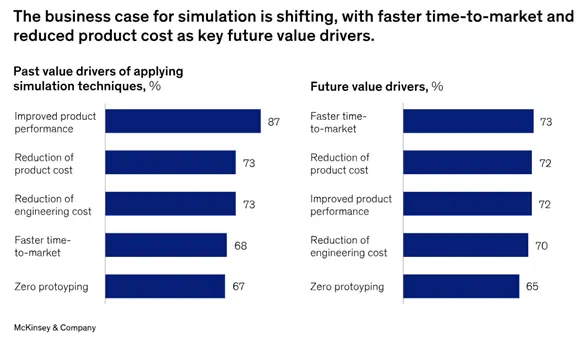
How Do Simulation and Physical Testing Work Together?
Simulation and testing are not competing approaches, they are complementary.
Simulation provides predictive insight and enables performance analysis before prototyping. Physical testing validates and refines models using real-world data.
When integrated effectively:
- Fewer design iterations are required
- Testing strategies become more focused
- Engineering decisions gain measurable confidence
The development process shifts from reactive problem-solving to controlled performance engineering.
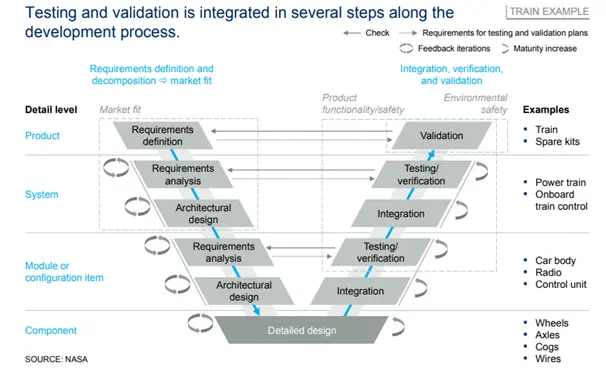
The Key Question for Modern Engineering Leaders
The question is no longer:
“Did the product pass the final test?”
The more relevant question is:
“Are we making engineering decisions with the right information, at the right time?”
Testing validates.
But competitive advantage comes from explaining and predicting performance early in the development cycle.
As product complexity and time-to-market pressures increase, organisations that bring performance insight upstream reduce technical risk, shorten development programmes, and improve launch confidence.
It is not about adding more tools.
It is about transforming when and how engineering knowledge is created.
What Role Does ATS Global Play in This Transformation?
At ATS Global, we help engineering teams anticipate product performance, not simply validate it at the end of development.
We support industrial organisations transitioning from reactive, test-driven processes towards predictive performance engineering by connecting simulation, physical testing, and decision-making from the earliest design phases.
Our objective is not to increase complexity, but to advance insight, reduce risk, and provide engineering teams with the confidence to decide earlier.
FAQ from Engineering Teams
👉 Ready to validate before you build? Let’s talk.